Showing posts with label before 1200. Show all posts

Saturday, 29 August 2026

How the Latin language influenced English with the word 'lily'

'Lily' is a word borrowed from Latin 'lilium'. The word entered the English language some time before the 12th century.


lily [noun] [before 12th century]
  • any of a genus ( of the family Liliaceae, the lily family) of erect perennial leafy-stemmed bulbous herbs that are nati...
  • any of various plants of the lily family or of the related amaryllis or iris families
  • any of various plants with showy flowers
  • as
  • a scarlet anemone (Anemone coronaria) of the Mediterranean region
See 'lily' on the Loan Words Map

See more loan words from Latin.

Etymology: Middle English 'lilie' from Old English, from Latin 'lilium'
See more loan words from before 1200.


Monday, 2 March 2026

Do you speak a little Latin when you say 'castle'?

'Castle' is a word borrowed from Latin 'castellum'. The word entered the English language some time before the 12th century.


castle [noun] [before 12th century]
  • a large fortified building or set of buildings
  • a massive or imposing house
  • a retreat safe against intrusion or invasion
  • rook
See 'castle' on the Loan Words Map

See more loan words from Latin.

Etymology: Middle English 'castel' from Old English, from Old French & Latin; Old French dialect (Norman-Picard) 'castel' from Latin 'castellum' fortress, diminutive of 'castrum' fortified place; perhaps akin to Latin 'castrare' to castrate
See more loan words from before 1200.


Sunday, 1 March 2026

When you hear 'eden' are you hearing English or Sumerian?

'Eden' is a word borrowed from Sumerian 'eden'. The word entered the English language some time before the 12th century.


eden [noun] [before 12th century]
  • paradise
  • the garden where according to the account in Genesis Adam and Eve first lived
  • a place of pristine or abundant natural beauty
See 'eden' on the Loan Words Map

See more loan words from Sumerian.

note: The Hebrew word is likely borrowed from the Akkadian edinnu which in turn comes from the Sumerian eden meaning plain or steppe.
Etymology: Late Latin, from Hebrew 'ʽĒdhen'
See more loan words from before 1200.


Monday, 7 August 2023

When you say 'gum' are you speaking Egyptian?

'Gum' is a word borrowed from Egyptian 'kemai'. The word entered the English language some time before the 12th century.


gum [noun] [before 12th century]
  • the tissue that surrounds the necks of teeth and covers the alveolar parts of the jaws
  • the alveolar portion of a jaw with its enveloping soft tissues
See 'gum' on the Loan Words Map

See more loan words from Egyptian.

note: Middle English: from Old French gomme based on Latin gummi from Greek kommi from Egyptian kemai.
Etymology: Middle English 'gome' from Old English 'gōma' palate; akin to Old High German 'guomo' palate, and perhaps to Greek 'chaos' abyss
See more loan words from before 1200.


Saturday, 12 November 2022

Is 'ferry' English, or is it actually Scandinavian?

'Ferry' is a word borrowed from Scandinavian 'ferja'. The word entered the English language some time before the 12th century.


ferry [verb] [before 12th century]
  • to carry by boat over a body of water
  • to cross by a ferry
  • to convey (as by aircraft or motor vehicle) from one place to another
  • transport
  • to fly (an airplane) from the factory or other shipping point to a designated delivery point or from one base to anothe...
See 'ferry' on the Loan Words Map

See more loan words from Scandinavian.

Etymology: Middle English 'ferien' from Old English 'ferian' to carry, convey; akin to Old English 'faran' to go
See more loan words from before 1200.


Scandinavian 'jól' in the English language

'Yule' is a word borrowed from Scandinavian 'jól'. The word entered the English language some time before the 12th century.


yule [noun] [before 12th century]
The feast of the nativity of Jesus Christ - christmas
See 'yule' on the Loan Words Map

See more loan words from Scandinavian.

Etymology: Middle English 'yol' from Old English 'geōl;' akin to Old Norse 'jōl' a pagan midwinter festival
See more loan words from before 1200.


The Scandinavian origins of the word 'glad'

'Glad' is a word borrowed from Scandinavian 'glathr'. The word entered the English language some time before the 12th century.


glad [adjective] [before 12th century]
  • having a cheerful or happy disposition by nature
  • experiencing pleasure, joy, or delight
  • made happy
  • made pleased, satisfied, or grateful
  • often used with 'of'
  • very willing
See 'glad' on the Loan Words Map

See more loan words from Scandinavian.

note: Related to Old Norse glathr ‘bright joyous’
Etymology: Middle English, shining, glad, from Old English 'glæd;' akin to Old High German 'glat' shining, smooth, Latin 'glaber' smooth, bald
See more loan words from before 1200.


Friday, 11 November 2022

Is 'morn' English, or is it actually German?

'Morn' is a word borrowed from German 'morgen'. The word entered the English language some time before the 12th century.


morn [noun] [before 12th century]
  • dawn
  • morning
See 'morn' on the Loan Words Map

See more loan words from German.

Etymology: Middle English, from Old English 'morgen;' akin to Old High German 'morgan' morning and perhaps to Greek 'marmairein' to sparkle
See more loan words from before 1200.


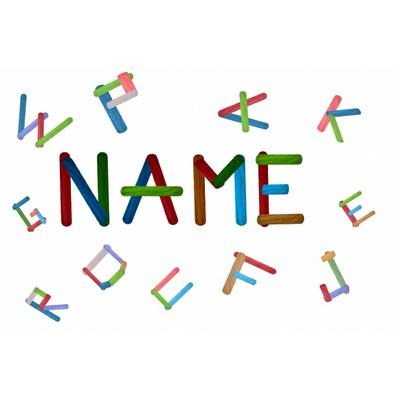
The Sanskrit origins of the word 'name'

'Name' is a word borrowed from Sanskrit 'nā́man'. The word entered the English language some time before the 12th century.


name [noun] [before 12th century]
  • a word or phrase that constitutes the distinctive designation of a person or thing
  • a word or symbol used in logic to designate an entity
  • a descriptive often disparaging epithet
  • reputation
See 'name' on the Loan Words Map

See more loan words from Sanskrit.

Etymology: Middle English, from Old English 'nama;' akin to Old High German 'namo' name, Latin 'nomen' Greek 'onoma, onyma'
See more loan words from before 1200.


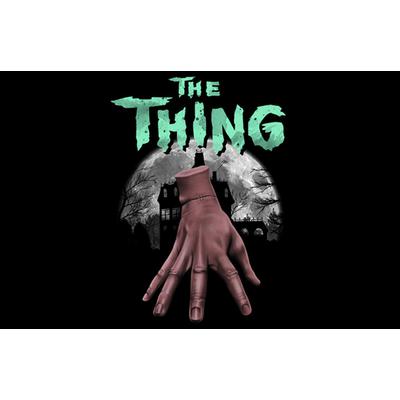
When you hear 'thing' are you hearing English or Scandinavian?

'Thing' is a word borrowed from Scandinavian 'thing'. The word entered the English language some time before the 12th century.


thing [noun] [before 12th century]
  • a matter of concern
  • affair
  • state of affairs in general or within a specified or implied sphere
  • a particular state of affairs
  • situation
  • event
See 'thing' on the Loan Words Map

See more loan words from Scandinavian.

Etymology: Middle English, from Old English, thing, assembly; akin to Old High German 'ding' thing, assembly, Gothic 'theihs' time
See more loan words from before 1200.